What Our Roof Inspection Checks First
Water rarely enters where you see the stain. It seeps along the underlayment, wicks past a fastener, and drips at the nearest joist or rafter. So a roof inspection starts at the deck and works outward to the roofline.
- Flashing gets checked first: chimney flashing, step flashing at a sidewall, apron flashing at the eave, and counter-flashing tucked into the mortar.
- Every penetration gets tested, because a pipe boot or vent boot cracks from UV long before the shingle around it lets go.
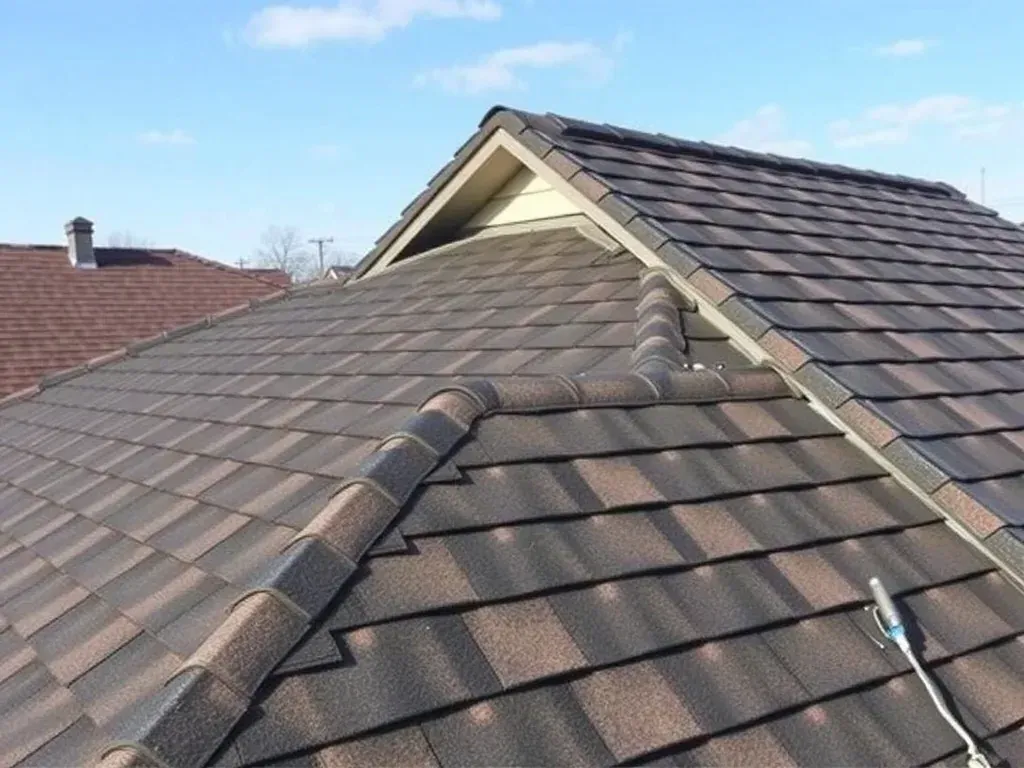
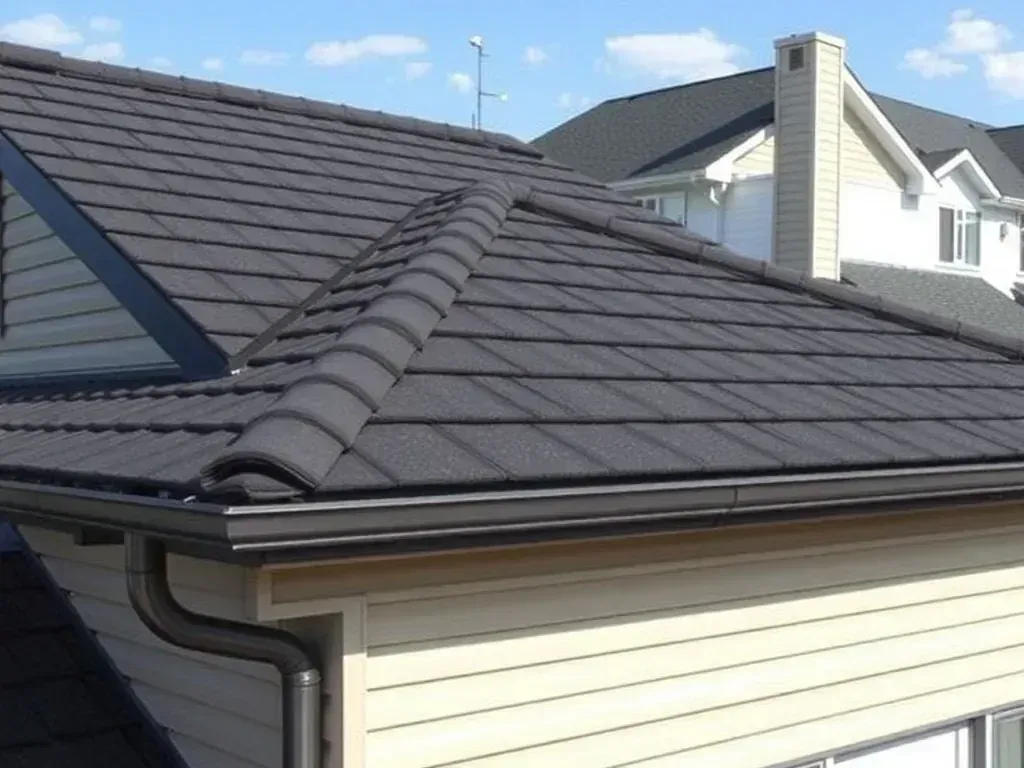
- Valleys, hips, and the ridge cap take the worst wind uplift, so we look for lifted nails, torn laps, and a missing ridge cap.
- Soffit vent and ridge vent airflow gets measured, since a plugged soffit starves the attic and cooks the insulation all summer.
- Skylights, dormers, and any attic fan get checked for a sealed boot flashing and a caulk bead that hasn't peeled.
- Gutters, downspouts, fascia, and soffit show whether water leaves the building or sits against the eave.
How We Find Damage You Can't See
An infrared scan reads the cool spots where moisture sits inside the sheathing. A moisture meter confirms it. Drone imagery covers the mansard, gambrel, and steep gable slopes we won't walk in ice.
- Rot and decay in plywood or OSB decking gets probed at the eave, the rake, and the verge.
- Granule loss, chalking, alligatoring, and blistering mark a shingle at end-of-life wear.
- Cracked or spalled slate and clay tile get flagged, along with concrete tile off its batten.
- Ponding water, a slow scupper, or loose coping points to a membrane that has delaminated.
- Trusses, rafters, and the ridge beam get read from inside the attic for sag, settle, and staining.
- Crews carry a safety harness, roofing square, nail gun, air compressor, and pry bar, so a loose screw or sealant joint gets fixed on the spot.
Roofing Materials We Inspect Around Newark
Newark roofs run from three-tab shingle on prewar two-families to modified bitumen on Ironbound warehouses. Each material fails its own way, and each fix carries its own price.
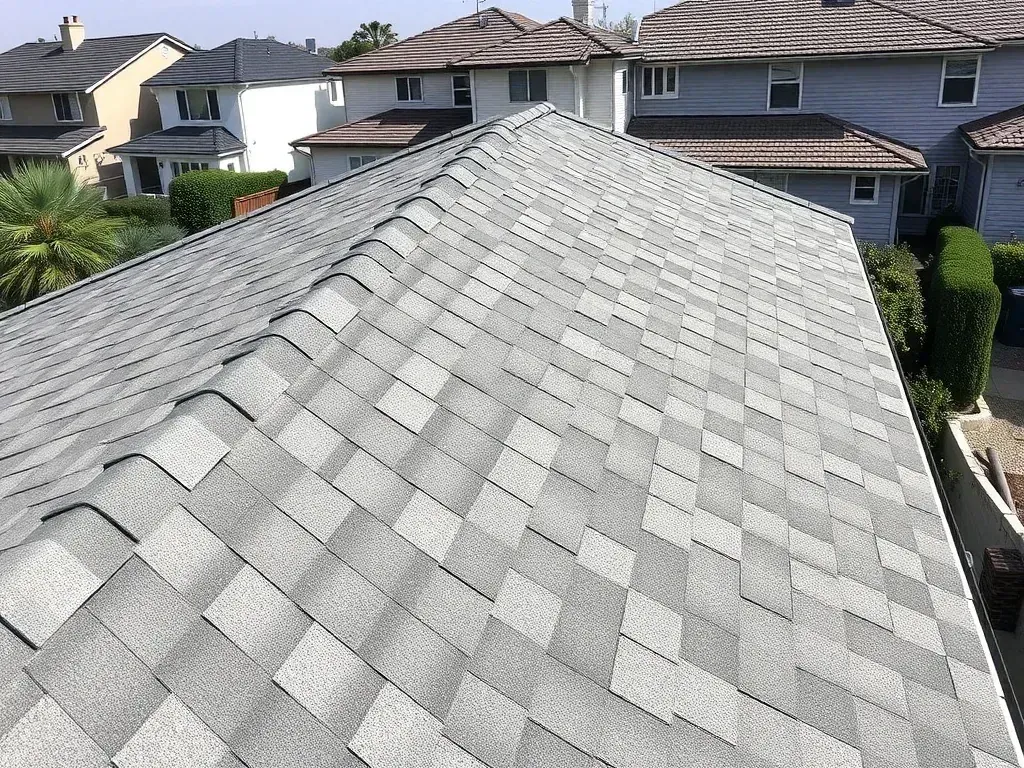
- Asphalt shingle and architectural shingle dominate Forest Hill and Weequahic, set with ring-shank nails on a starter course and staggered courses.
- Wood shake and cedar shake split and hold moss, keeping the substrate damp long after rain stops.
- Slate, clay tile, and concrete tile can outlive the fasteners holding them, so we check the batten and the nail.
- Metal panel, standing-seam panel, and corrugated panel depend on a sealant washer at every exposed fastener.
- TPO, EPDM, and PVC membrane cover low-slope sections downtown, alongside built-up roof and modified bitumen.
- Tar, asphalt, bitumen, roofing felt, tar paper, and synthetic underlayment tell us how many layers sit on the deck.
Freeze-thaw cycles push meltwater under the shingle and into top-floor ceilings near exterior walls. That is the ice dam pattern we find across Clinton Hill and Roseville, and it is why ventilation and insulation matter as much as the shingle. A self-adhered ice-and-water shield belongs at the eave.
A torch-applied modified bitumen section fails nothing like a cedar shake roof. Overhangs, a storefront canopy, or a fabric awning all change how water sheds at the roofline.
Timelines, Estimates, and What Moves the Price
A standard roof inspection runs 60 to 90 minutes; a post-storm walk with drone imagery takes longer. We book most of Essex County inside the week, and the roof estimate is yours whether or not you hire us.
- Roof pitch, height, and access set the labor, deciding whether we stage a scaffold, a ladder, or a boom over the parapet.
- Deck condition is the swing factor: a tear-off that reveals rotted sheathing adds plywood and a dumpster of debris.
- A recover or overlay saves money up front, but we won't lay one over a wet substrate.
- Flashing details — chimney, counter-flashing, boot flashing, apron flashing — get priced per detail, not per square.
- Anything past a minor patch meets Newark building code, so we pull the permit before the work starts.
- A coating, a purlin repair, or a snow guard anchor shows up as its own line before you approve anything.
- Insurance claim assistance is available when storm damage is the cause, with photos written to the adjuster's scope.