How an Emergency Roof Repair Call Actually Runs
Storm response is a sequence, not a guess. When the phone rings at 11 p.m., we ask where the water is showing, how old the roof is, and how steep the pitch is.
A steep hip loads differently than a low-slope gable, so we ask about pitch before we roll. After-hours calls get a crew, not an answering service.
- We set a ladder and safety harness at the eave, photograph the roofline, and clear debris from the gutter and downspout.
- A temporary tarp covers the torn field course, anchored with fasteners rated for wind uplift.
- Inside, we trace the stain back to a pipe boot, chimney flashing, or failed step flashing, because water entering there can travel along a rafter before it drips.
- We pull wet insulation and underlayment, then check the roof deck, sheathing, and rafters for rot, decay, or sag.
- Permanent work uses replacement shingles, self-adhered ice-and-water shield at the eave and valley, new drip edge, counter-flashing, and apron flashing set in fresh caulk.
- We photograph the damage and write a line-item scope so your insurance claim starts with evidence.
What a Roof Inspection Looks For After the Storm Passes
A roof inspection covers the whole assembly, not just the hole you can see. A roofer checks the perimeter, then the rooftop, then the attic.
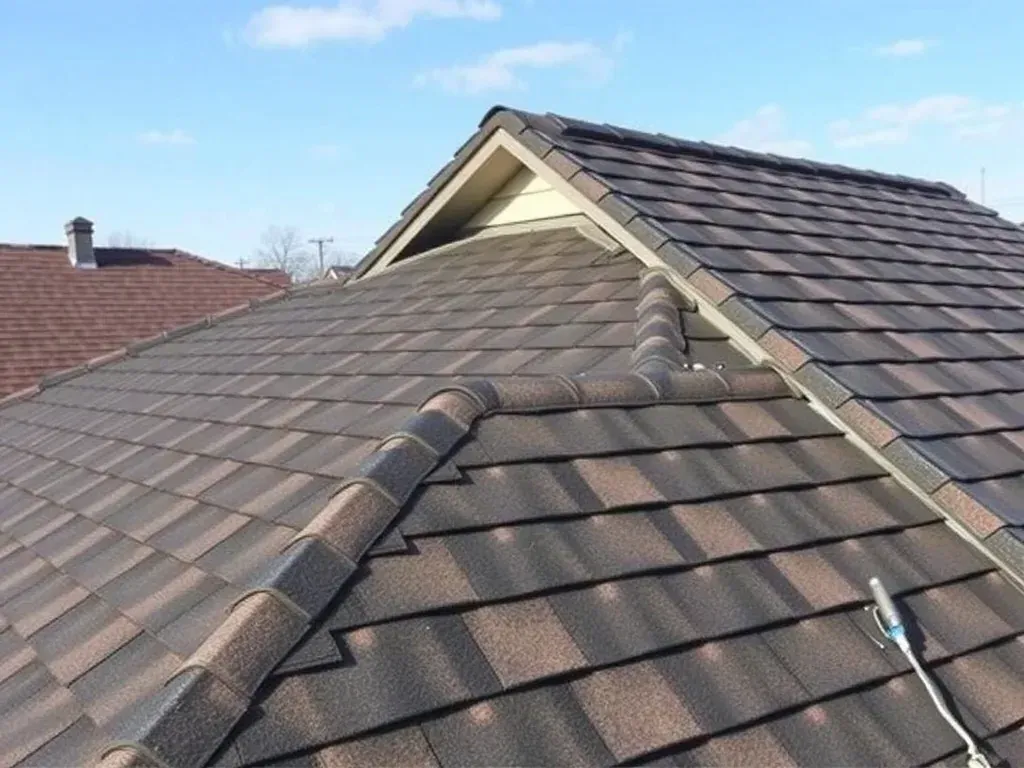
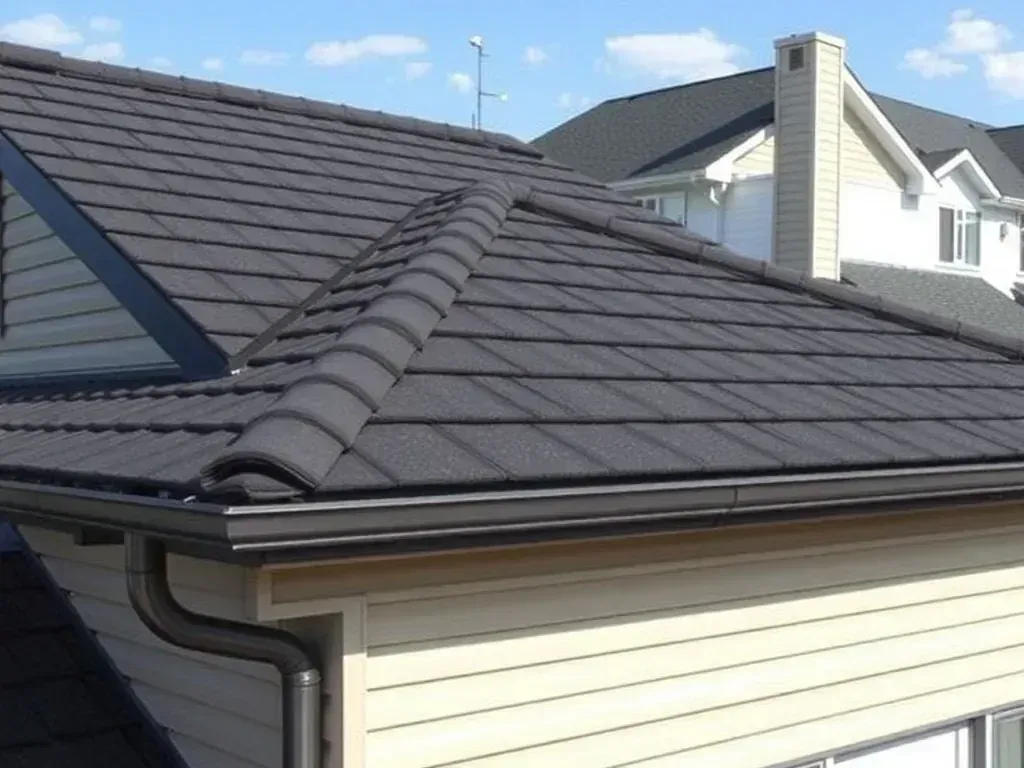
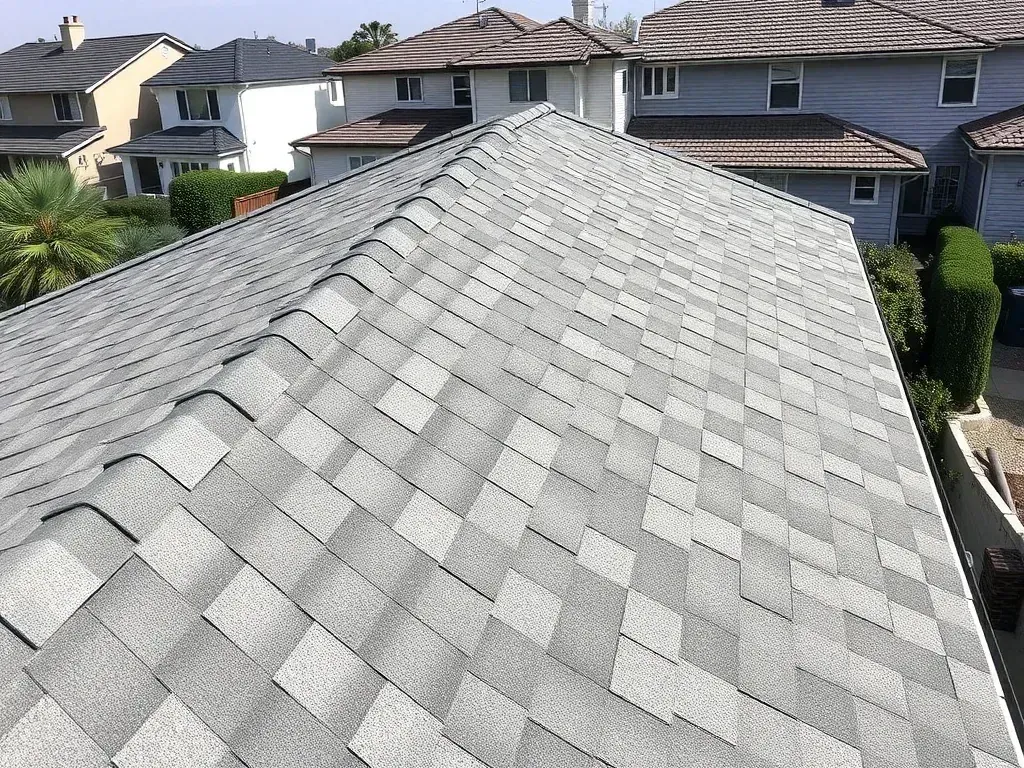
- Asphalt shingle: three-tab shingle and architectural shingle both bruise and shed granules, and bare asphalt mat means end-of-life wear.
- Wood shake and cedar shake: splits, curl, and decay where the shake meets the eave.
- Slate, clay tile, and concrete tile: slate spalls and flakes, tile cracks at the fastener, and both hide water intrusion underneath.
- Metal panel, standing-seam panel, and corrugated panel: backed-out screws, cracked sealant, and corrosion at exposed fasteners.
- Flat roofing: TPO, EPDM, PVC membrane, modified bitumen, and built-up roof pond water, delaminate at seams and along the parapet, and clog the scupper and coping.
- Roofline parts take wind first, including the skylight, dormer, canopy, awning, overhang, soffit, fascia, rake, verge, and ridge cap.
Which Materials We Specify, and Why
Materials get matched to what is already up there and to Newark's freeze-thaw cycle. A mismatched shingle or wrong-profile panel fails at the edges first.
- Ice-and-water shield is a self-adhered membrane for the eave, valley, and roof-to-wall joints, and the best defense against an ice dam.
- Synthetic underlayment replaces roofing felt and tar paper on most tear-offs, though felt still suits older, well-ventilated decks.
- Roof cement and mastic are adhesives and sealants for spot work, not a substitute for new flashing.
- On tile and slate we check the batten and counterbatten grid plus the vapor barrier above the deck.
- A coating can add years to a flat membrane that is chalking but not split.
Tools and Site Setup on a Working Roof
How a job site is run tells you more than any sales pitch does. We keep the driveway clear, the debris contained, and the ladders off your gutter.
- A pry bar and roofing shovel strip the tear-off, and a nail gun and air compressor run off a generator when the house power is out.
- A roofing square and chalk line set the starter course, and staggered courses keep the field from lining up into a straight leak path.
- Scaffold goes up on taller buildings, and a torch stays in the truck unless the job is modified bitumen over an old tar deck.
- Every roof estimate lists substrate condition, ventilation, and building code items before work starts, and a dumpster stays clear of the house.
- Waterproofing the details matters more than weatherproofing the middle of the field, which is where water actually gets in.
What Drives the Bill and the Timeline
A roof estimate for storm work comes down to access, extent, and deck condition. We walk through each one with you before anything is signed.
- Access and pitch: a mansard or gambrel roof needs more staging and tie-off time than a plain gable.
- Extent: swapping a boot flashing or vent boot is a one-trip fix, while a torn rake, soffit, and fascia runs two days.
- Deck condition: rotted plywood or OSB sheathing gets replaced, and we check the truss, joist, ridge beam, purlin, and decking before anything goes back down.
- Insurance scope: we build from the adjuster's line items and file a supplemental claim with measurements if the first pass missed damage.
Most after-hours temporary repairs take two or three hours. Permanent repairs usually run one or two days. A full tear-off, with a recover or overlay decision on the old layers, takes longer.
We will also tell you when repair is the wrong call. If granule loss and end-of-life wear cover more than a third of the roof, patching wastes your money.
Newark Conditions That Change the Work
Newark sits in a classic ice-dam climate, and freeze-thaw cycles push meltwater under shingles and into ceilings near top-floor exterior walls.
- Roughly 46 to 50 inches of precipitation falls in a normal year, so water gets plenty of chances to seep into a gap.
- Snowfall averages 26 to 29 inches a season, and one nor'easter can drop a foot overnight — that is when ice dam removal calls start and steam ice builds at the eave.
- Hurricane Sandy in October 2012 pushed coastal flooding into eastern Essex County and changed how we plan for wind uplift.
- Older Ironbound and Weequahic roofs carry layers of tar and bitumen from decades of patching, and those need a tear-off rather than an overlay.
- We handle residential roofing and storm damage work across Vailsburg, Forest Hill, University Heights, Downtown Newark at Four Corners, Roseville, and Clinton Hill, all within Essex County.
Between I-78, the New Jersey Turnpike, US Route 1/9 over the Pulaski Skyway, and Route 21 at McCarter Highway, wind-driven rain hits one face of a building harder than the next.
Sustainability, Energy Efficiency, and Staying Ahead of Weather
Efficiency starts at the top of the house. A hot attic cooks shingles from underneath and shortens the life of the roof you just paid for.
- Ridge vent and soffit vent work as a pair, and blocking one to save heat pushes moisture back into the roof deck.
- An attic fan or solar-powered vent helps on a gambrel or mansard roof where a ridge vent is hard to fit.
- Green roofing on a flat rooftop can work, but it needs a sound waterproofing layer and a structural review first.
- Cool-rated architectural shingles and reflective coatings cut summer cooling load more than most owners expect.
- Two maintenance visits a year, after the leaves fall and after the spring thaw, catch most leaks before they reach a ceiling.
Hiring a roofing contractor after a storm is a timing problem as much as a price problem. The longer a tarp sits, the more decking you replace.
Call 877-840-1315 for a free estimate from a licensed & insured Newark roofing company, and we will tell you plainly whether this is a leak repair, a replacement, or a wait-and-watch.